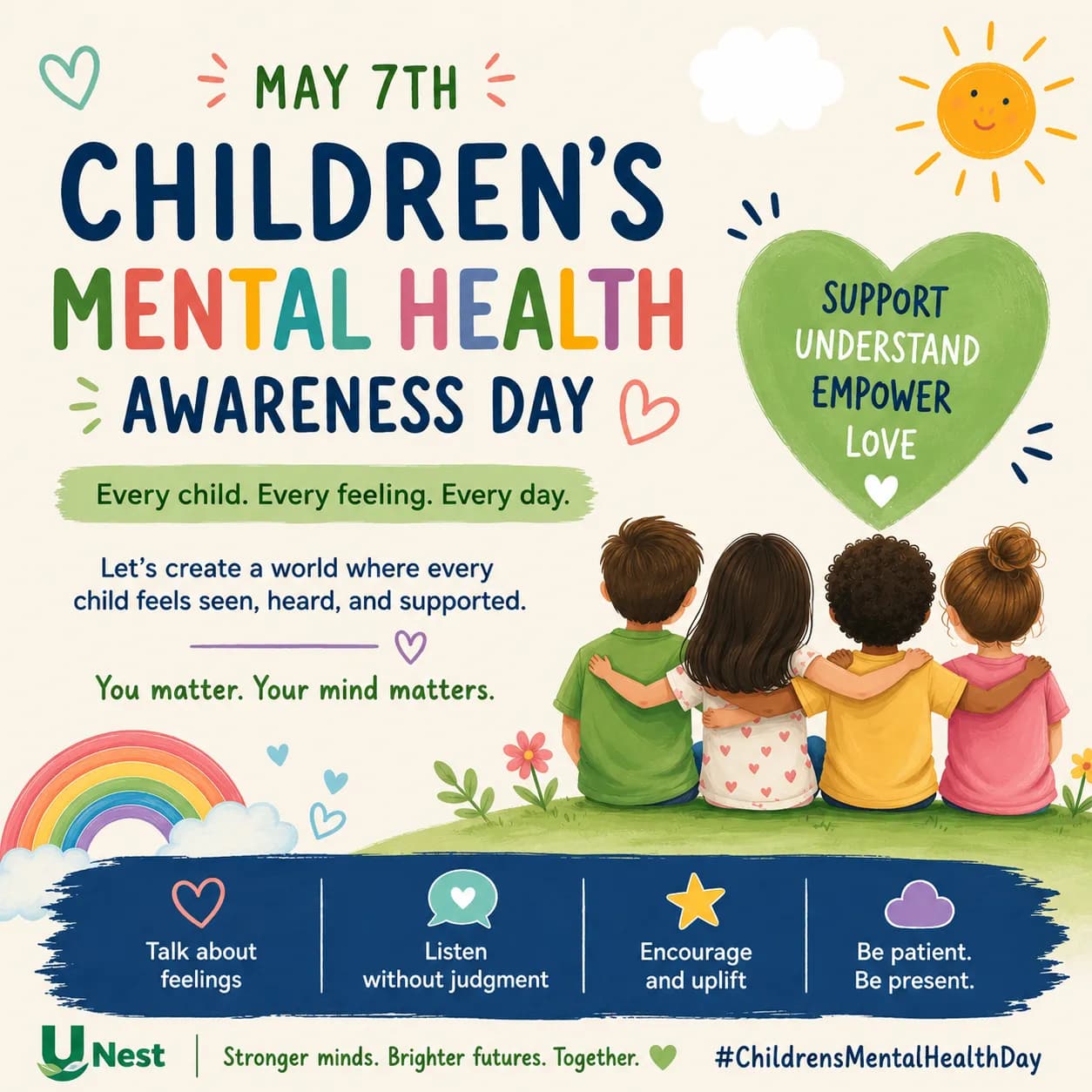
Financial Security and Your Child's Mental Health
Every parent knows the feeling. You're holding your child close, watching them sleep, and all you can think about is whether they're going to be okay. Not just today, but ten, twenty, thirty years from now.
That instinct to protect, to prepare, to provide is one of the most fundamental parts of being a parent. And this Children's Mental Health Awareness Day, we want to talk about something that doesn't get nearly enough attention: the connection between a family's financial foundation and a child's emotional wellbeing.
What the Research Tells Us
The numbers are sobering. According to the CDC, 1 in 6 children between the ages of 2 and 8 currently lives with a mental, behavioral, or developmental disorder. Anxiety and depression in children have risen sharply over the past decade, and researchers consistently point to the home environment as one of the most significant factors.
More than half of parents report that financial stress negatively impacts their family's wellbeing. And about 50% of all mental health conditions show signs by age 14.
Financial stress doesn't stay behind closed doors. Children are perceptive. They absorb the tension in a household, even when adults do their best to shield them from it. Parental worry about money translates into emotional instability for children in ways that are measurable and lasting.
This isn't about blame. It's about opportunity. Because the flip side of this research is equally powerful: families who have a sense of financial direction, even a modest one, raise children who show greater emotional resilience, better academic outcomes, and healthier social development.
Security Isn't Just Emotional
We talk a lot about giving children a "safe space" at home. We invest in therapy, in open conversations, in creating routines and stability. All of that matters enormously. But we rarely talk about how financial planning is also an act of emotional care, not just for our future selves, but for our children's mental health right now.
When you have a plan for your child's future, something shifts. The low-level financial anxiety that so many parents carry, the "what if something happens?" worry, begins to ease. And that ease is something your child feels, even if they can never put it into words.
A child who grows up knowing that their parents are actively building toward their future doesn't just inherit money someday. They inherit a sense that the future is something to look forward to, not fear.
Small Steps, Lasting Impact
You don't need to be wealthy to give your child this gift. You just need to start.
Open a dedicated investment account for your child. A tax-advantaged account, like those offered through UNest, lets your money grow more efficiently over time. Starting early, even with small amounts, makes a real difference thanks to compound growth.
Make it a family conversation. Age-appropriate talks about saving and planning teach kids that the future is something we actively build, not something that just happens to us.
Invite your village to contribute. With UNest, friends and family can gift directly to your child's investment account. Birthdays, holidays, and milestones become moments that compound, literally.
Start small, but start now. UNest accounts begin at just $2 per month. The amount matters less than the habit and the intention behind it.
Investing in Their Whole Future
Children's Mental Health Awareness Day is a reminder that our kids' wellbeing is multidimensional. It's the conversations we have, the love we show, the environments we create, and yes, the financial foundations we build quietly in the background.
Every child deserves to grow up with one less thing to worry about. This May, as we honor the mental health of our children, take one small step toward their financial future too.