The Nest Egg #13: What will you do with your extra hour?
The Fed's latest decision, plus why time matters when saving
By the UNest team · 4 min read
Hi there, and Happy Halloween!
Clocks fall back this Sunday, November 1, so everyone gets an extra hour this weekend. So, for this issue we are talking about time: we have what the Federal Reserve decided at its meeting this week, why time matters when you're saving for your kid, and a few facts about where that extra hour came from.
Let's get into it!
– Mitch, from The Nest Egg team
📰 IN THE NEWS
The Fed holds rates steady
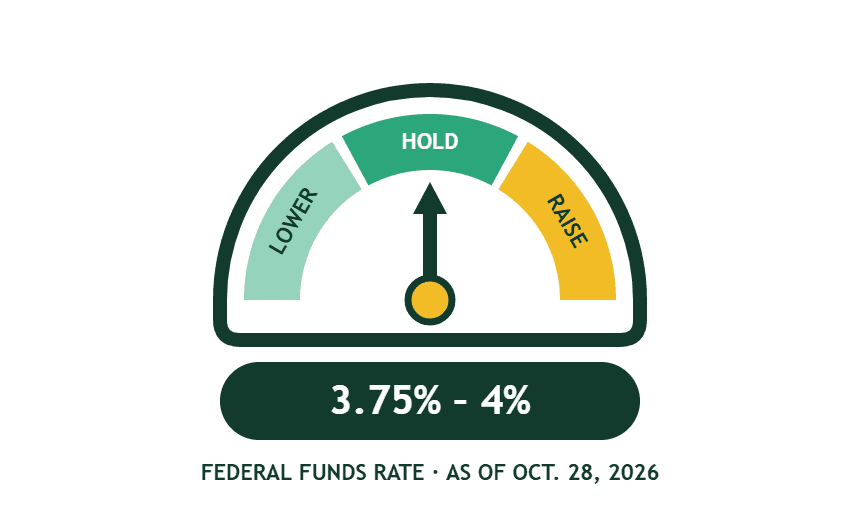
On October 28, the Federal Reserve kept its key interest rate, the federal funds rate, at 3.75% to 4%, after raising it in September. The vote was 10 to 2, and the two members who disagreed wanted another quarter-point increase. In its statement, the Fed said the economy is growing at a strong pace but "inflation remains elevated." Its next meeting is December 8–9.
What this means: With no change this month, rates on savings accounts, credit cards and loans aren't likely to move much because of this decision. Those rates are set by each bank or lender and can still change.
Sources: Federal Reserve, “Federal Reserve issues FOMC statement,” Oct. 28, 2026; Federal Reserve, “Federal Reserve issues FOMC statement,” Sept. 16, 2026. Rates as of Oct. 28, 2026. This is not investment, tax, or legal advice.
💡 FOR PARENTS
Start now, sort out the details later

Many parents hold off on saving for their kid because they don't know yet exactly what they're saving for. A recent Vanguard article says that's a common challenge, and its research points to a simple approach: start saving early, clarify your goals over time, and shift savings into the accounts that fit those goals as they come into focus.
“Most families don't begin with a fully formed savings strategy, and that's OK,” said Clifford Felton, a Vanguard investment strategist and lead author of the research. “What's more important is getting started.” The advantage of starting early is time. Investments rise and fall along the way, and starting sooner gives your savings more years to stay invested.
It also helps to bring your kid into it. Researchers at the University of Michigan found that children from low and moderate income families may be more likely to enroll in and graduate from college when they have savings of their own set aside for school, even small amounts. You can show them their account, let them make a deposit, and talk about what they're saving for. It can help set them up for their future.
Sources: “Saving today for a child’s tomorrow,” Vanguard, Aug. 25, 2026; Elliott, Song & Nam, “Small-dollar children’s savings accounts and children’s college outcomes by income level,” University of Michigan Center on Assets, Education, and Inclusion. UNest is not affiliated with Vanguard. This is not investment advice.
⏰ QUICK FACTS
Where the extra hour came from
1 Clocks are falling back at 2 a.m. on Sunday, November 1. Congress set today's schedule, the first Sunday in November, in the Energy Policy Act of 2005.
2 Time zones in the U.S. were first set by the railroads in 1883. They didn't become law until the Standard Time Act of 1918, which also created daylight saving time.
3 Daylight saving time was repealed a year later, in 1919, and became a local decision for decades.
4 Not everyone gets the extra hour. Hawaii and most of Arizona stay on standard time all year, so their clocks won't change.
Ask your kid: If you got one extra hour every week, what would you spend it on?
Source: U.S. Naval Observatory, “Daylight Saving Time”.
📅 MONTHLY DEPOSITS

Put time on your side
You don't need to remember to save. Set up a monthly deposit to your kid's UNest account once, and it happens on its own, month after month.
To set it up: open the UNest app, go to your kid's account and choose a monthly amount. You can change or pause it anytime.
Deposits are invested according to the account's selected portfolio and are subject to market risk; investments may lose value. Recurring deposits do not guarantee a profit or protect against loss. UNest custodial accounts are UTMA accounts; funds belong to the child. This is not investment advice.
Know a parent who would like UNest? Earn $20 when they complete 3 consecutive monthly deposits.
How was this issue? Reply to Mitch and let me know what you think.
Referral: when your friend signs up using your link and sets up monthly recurring deposits for their child, you receive $20 once they complete 3 consecutive monthly deposits. The $20 is added directly to your UNest account.