LATEST POSTS

Summer Is Expensive. Here's How a UTMA Can Help.
Summer camps, sports leagues, and travel add up fast. A UTMA account helps families get ahead of seasonal costs that climb every year.
Continue Reading →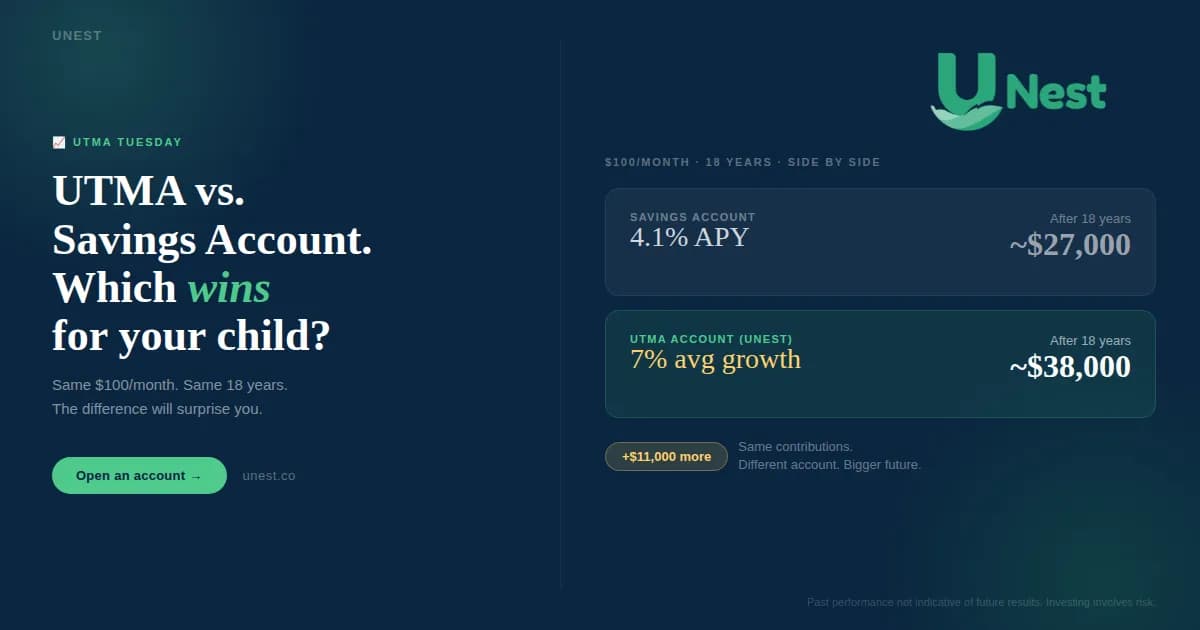
UTMA vs. Savings Account: Which Wins for Your Child?
A savings account earns interest. A UTMA invests in the market. Over 18 years, that one difference could mean $11,000 more for your child.
Continue Reading →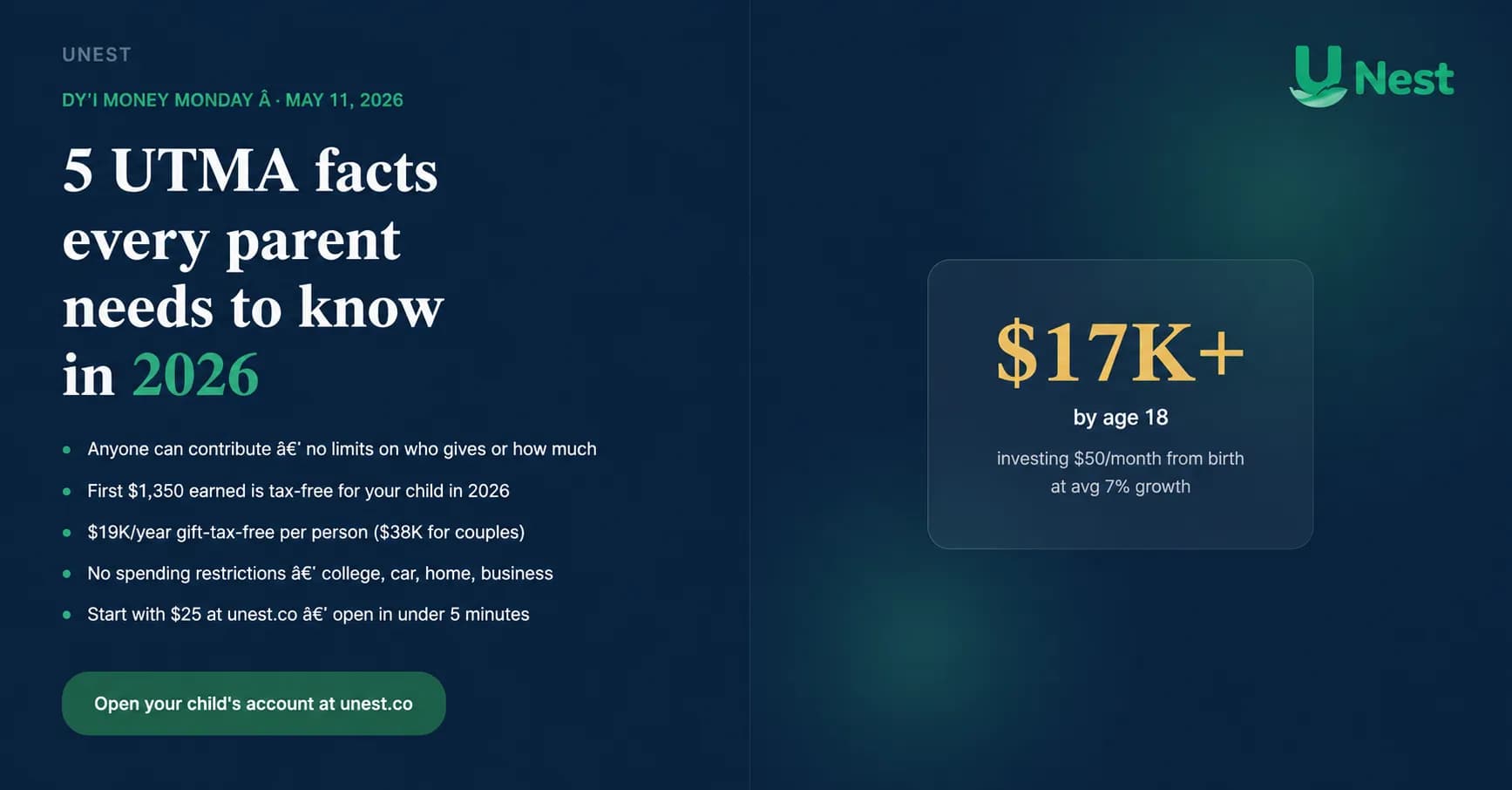
5 UTMA Facts Every Parent Needs to Know in 2026
UTMA accounts are more flexible than you think. These five facts cover contributions, taxes, spending freedom, and why starting early matters most.
Continue Reading →
Financial Security and Your Child's Mental Health
Research shows a strong link between family finances and children's emotional wellbeing. Small steps toward financial planning can make a big difference.
Continue Reading →
The Best Gift for Your Grandchild Doesn't Come in a Box
Grandparents spend billions on gifts kids forget in weeks. UNest's gifting feature turns birthdays and holidays into real investments.
Continue Reading →
Earth Day: Investing in Kids Is Investing in the Planet
Earth Day 2026 reminds us that the future belongs to our children. Here's how financial security and environmental stewardship go hand in hand.
Continue Reading →
Why Investing for Your Child in 2026 Matters More Than Ever
Compound growth, shrinking timelines, and a generation entering the most complex economy yet. Here's why starting now changes everything.
Continue Reading →
Why Investing for Your Child Now Matters More Than Ever
Money habits form by age 7 and compound growth rewards early starters. Here's why 2026 is the year to open your child's investment account.
Continue Reading →
Money Habits Start Earlier Than You Think. Try This Weekend.
Kids form money habits between ages 3 and 7. Three simple activities you can try with your kids this weekend, no apps needed.
Continue Reading →
Tax Refund 2026: A Smart Parent's Guide to Using Yours
The average 2026 tax refund hit $3,571. Here's how parents are turning theirs into a real head start for their kids.
Continue Reading →
Raising a Child Is 28% More Expensive. What Parents Can Do.
The cost of raising a kid jumped 28% in three years. Here are the money moves parents are making to keep up without falling behind.
Continue Reading →
Kids and Money: Why Early Financial Lessons Matter
Kids start learning about money earlier than you think. Small conversations and simple habits now can shape their financial future.
Continue Reading →
Why Financial Education for Teens Matters Now
Teens face real money decisions earlier than ever. Here's why teaching them about saving, credit, and investing now sets them up for life.
Continue Reading →Don’t just take our word for it
Hear what trusted money experts say about why UTMA and UGMA accounts can be a smart way to invest for a child’s future.

Investing for your kid’s future
Dave Ramsey
Personal Finance Expert
Tap for more
There are some tax advantages to using UGMA and UTMA accounts… Since they’re in your child’s name, the accounts will be taxed according to their tax bracket… There are no contribution limits on UGMA and UTMA accounts.
Dave Ramsey
Personal Finance Expert
Read
Tap to flip back

Straightforward “starter” investing account for kids
Jill Schlesinger
Emmy winning Business Analyst
Tap for more
…you could consider opening an account where you can dive deeper with the kids by your side. The easiest way to do so is to open a custodial account, known as an UGMA … or UTMA … account.
Jill Schlesinger
Emmy winning Business Analyst
Read
Tap to flip back

Give children money that can accumulate over time
Jim Cramer
CNBC Host
Tap for more
You can give children money that can accumulate somewhat tax-free over time... I love them (UTMAs) because they were like, trusts that you didn’t need lawyers to create.... I think it’s one of the better tax breaks around though. I know hunting for tax breaks may not sound very exciting, but that’s how you take care of your family.
Jim Cramer
CNBC Host
Watch
Tap to flip back